Break areas in the office have gone from being a “luxury” to becoming a strategic element in workspace design. Today we know that spaces that allow employees to briefly disconnect, interact, change posture or simply relax not only improve their well-being, but also enhance productivity, creativity and the overall organizational climate of the company.
In this article, we analyze why break areas are important, what benefits they provide according to evidence, and how you can create them effectively with soft seating furniture, modular storage units and tiered seating from Federico Giner.
The impact of active breaks on productivity and well-being
Science and practice agree: we cannot maintain maximum concentration and performance continuously without breaks. Recent studies show that:
– Taking short breaks improves mental and physical well-being, helps reduce stress, and maintains energy levels throughout the workday.
– Breaks allow the brain to reset, reduce fatigue, and help return to tasks with greater focus and mental clarity.
– These pauses are also beneficial for physical health, especially for people who spend long hours sitting, as they reduce tension and muscle pain.
The implementation of well-designed and comfortable break areas in the workplace is not merely a luxury, but a smart business strategy that positively impacts multiple aspects of the organization. Experience in modern office design shows that break areas designed with comfort, flexibility, and purpose encourage:
– Creativity and innovative thinking: Encouraging active mental disconnection through short breaks in a relaxed environment allows the mind to release intense focus, facilitating idea incubation and the emergence of original solutions. A setting different from the usual desk provides sensory stimulation and a shift in perspective, which can trigger new neural connections, promoting lateral thinking and creative problem-solving. In addition, reduced stress is directly linked to a greater ability to generate novel ideas and more agile, flexible thinking.
– Greater social interaction among colleagues: Break areas are essential for strengthening interpersonal relationships by acting as informal meeting points, allowing employees from different teams and hierarchical levels to connect outside of task-focused environments. These casual encounters often foster spontaneous collaboration and synergy, encouraging conversations about projects and challenges, improving internal communication, and facilitating information sharing and mutual understanding in a more relaxed atmosphere.
– Improved work environment and talent retention: Break areas significantly contribute to employee well-being and productivity, increasing job satisfaction as they are perceived as a valuable benefit and demonstrate the company’s care for its people. This helps prevent burnout and absenteeism by allowing employees to recharge. Moreover, investing in these spaces and in an attractive work environment differentiates the company as an employer, giving it a crucial competitive advantage in attracting and retaining top talent in today’s labor market.
In other words, breaks are not a “pause.” They are an investment in performance, health, and company culture.
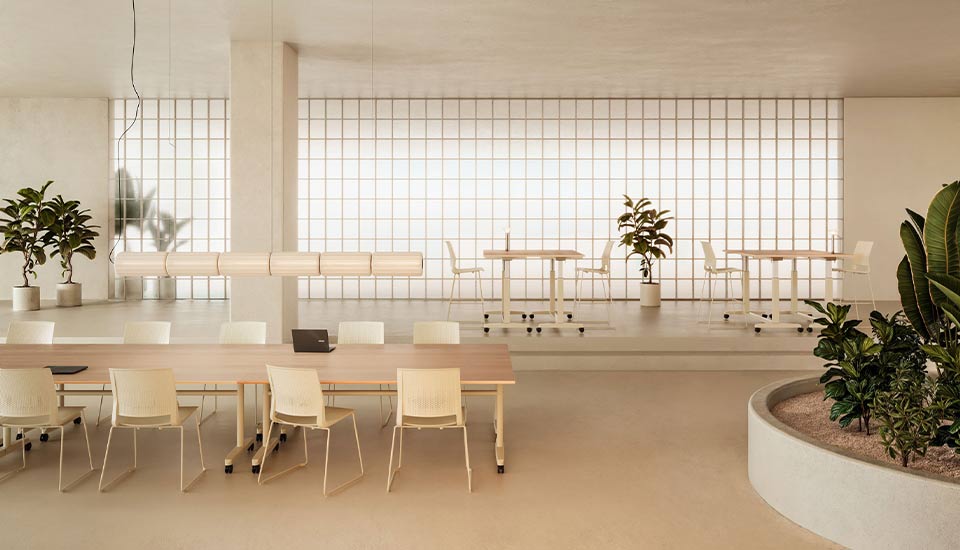
Furniture ideas for relaxation areas (sofas, poufs, and more)
Creating useful and aesthetically coherent break areas in your office starts with choosing the right furniture—pieces that invite people to sit, relax, chat, or focus outside the traditional workstation.
Soft seating: the foundation of a comfortable break space
Soft seating elements—armchairs, sofas, poufs, and cozy seating—are ideal for creating relaxation areas in the workplace. They should aim to meet several key objectives to maximize their benefits:
– Create corners of comfort and well-being within the office: These spaces should act as oases of calm, offering visual and acoustic disconnection from the usual workstation. The ambiance (soft lighting, neutral or relaxing colors, plants) and furniture (comfortable armchairs, sofas, poufs) are essential to create a homely, relaxing atmosphere. The goal is to provide a mental and physical break that combats stress and visual fatigue.
– Enable short, effective breaks without losing functionality: The aim is not to encourage prolonged inactivity, but to allow strategic micro-breaks (5–15 minutes). These short pauses, when taken in an appropriate environment, have been shown to improve concentration, productivity, and problem-solving ability upon returning to work. Proximity and accessibility are key so employees can use these spaces without feeling disconnected from their responsibilities.
– Encourage informal encounters, spontaneous conversations, and social bonds: Beyond individual rest, these areas act as hubs for unplanned social interaction. They encourage employees from different teams or departments to meet, chat about non-work topics, or exchange ideas in a relaxed setting. This strengthens team cohesion, fosters a sense of community and belonging, and promotes creativity and innovation, as many great ideas emerge from spontaneous, informal conversations.
Discover soft seating options that combine ergonomics and aesthetics in the FG collection:
https://federicoginer.com/en/product-category/softseating-en
This type of furniture transforms otherwise neutral spaces into welcoming areas where teams genuinely want to spend time.

Modular storage units: organization and versatility
Modular storage units are not just for storage—they also help create effective and attractive relaxation areas through a design approach that combines functionality, accessibility, and well-being. They are useful for:
– Visually defining spaces, separating relaxation areas from work zones without building physical walls that block light or communication.
To delimit relaxation areas in the office and create a differentiated environment, it is recommended to use rugs or platforms to introduce changes in texture or color on the floor, incorporate specific furniture such as sofas, armchairs, or poufs with styles and colors distinct from the work area, use subtle dividers (low shelves with plants, screens, or light curtains) that suggest separation without isolating, and apply ambient lighting with warm, soft, or decorative lights, contrasting with the brighter, functional lighting of workspaces.
– Improving accessibility to resources and encouraging use: It is essential to keep materials such as books, blankets, and wellness kits accessible and organized, ensuring intuitive and quick access so as not to interrupt break time. This can be achieved through smart storage—open shelves, carts, or baskets for books, magazines, or board games—and by placing soft blankets and cushions in visible spots. You can also include wellness kits with aromatherapy diffusers (e.g., lavender oils), eye masks for naps, or meditation kits, always ensuring a clear system for cleanliness and maintenance.
– Adding flexibility to the space: This approach supports multifunctional areas suitable for personal breaks, quick chats, or team-building activities. Involving employees—allowing them to slightly rearrange furniture or suggest additions—also fosters a sense of ownership and belonging.
For inspiration on flexible storage solutions:
https://federicoginer.com/en/product-category/cabinets/
Modular storage units are perfect allies for creating relaxation areas with both personality and functionality.

Stands and open areas: relaxation and casual gatherings
Beyond enhancing comfort, stands can be integrated as meeting zones or informal spaces for team talks, mini-presentations, or even quick active breaks. These areas should be multifunctional and flexible, adapting to various needs. They work well as:
– A stage for short presentations, equipped with a screen and quick connectivity where employees can spontaneously share ideas, projects, or knowledge (5–10 minutes), fostering a culture of continuous learning and knowledge exchange.
– A space for micro-breaks, designed for short meditation, reading, or simply enjoying a moment of silence away from office noise. Adding elements like water features or plants can enhance the relaxing atmosphere.
– Social meeting points that do not disrupt the main workspace. Strategically located (e.g., near the kitchen or a coffee machine), they encourage informal conversations and camaraderie. In tech-oriented offices (and beyond), it is common to include playful elements such as ping-pong tables, foosball, or board games, which help relieve stress and promote non-work social interaction.

Integrating leisure spaces without losing professionalism
A well-designed break area should feel neither like purposeless leisure nor like a disguised meeting room. To ensure these spaces fulfill their function, several design and management principles should be followed:
1. Define the purpose:
– Rest/Recharge: Quiet spaces for full disconnection (reading, relaxation).
– Informal collaboration: Areas for quick chats or spontaneous brainstorming.
– Active breaks/Wellness: Zones equipped for movement and stretching (yoga, games).
2. Variety of elements:
– Include highly comfortable seating (sofas, poufs).
– Provide functional surfaces (side tables) for drinks/devices.
– Create small setups for private conversations.
– Offer connectivity (power outlets, Wi-Fi) for productive breaks.
3. Aesthetics and atmosphere:
– Maintain visual consistency with the office.
– Use warm, adjustable lighting and natural light where possible.
– Improve acoustics with panels or sound-absorbing materials.
– Incorporate natural elements (plants, wood) to reduce stress.
Break areas should feel like a natural extension of the daily workflow—not an isolated or disconnected zone.

We help you create office relaxation spaces
If you are considering transforming or incorporating break areas into your workspace, here are some practical recommendations:
– Design micro-zones: you don’t need a large room—even a small corner with soft seating and a couple of poufs can make a difference.
– Embrace flexibility: modular storage allows you to reorganize the space as needed.
– Balance comfort and professionalism: adding cozy elements enhances—not diminishes—professionalism.
– Encourage movement: combining relaxation areas with stretching or micro-activity zones creates a dynamic and healthy environment.
And remember: designing break areas with soft seating, modular storage, and stands from FG not only improves well-being, but also boosts overall office efficiency.
Today more than ever, offices that invest in relaxation areas are not only supporting their teams’ physical and mental health—they are also enhancing productivity, creativity, and workplace culture.
Rest is not a break from work—it is an active part of an efficient workday. With proper planning and furniture designed for comfort and flexibility, you can transform any office into a space where talent performs better, collaborates more, and feels more satisfied.
